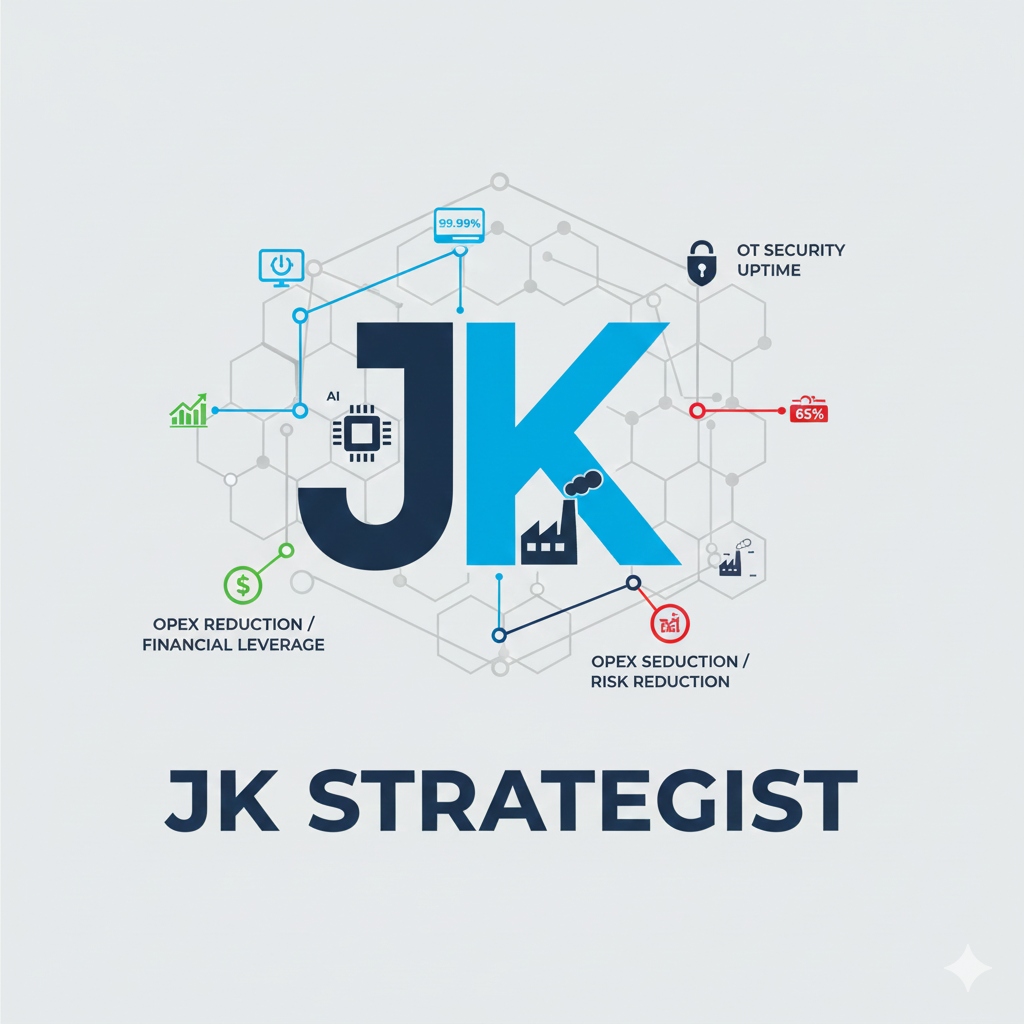
Driving 70% -> 99% Operational Resilience and Digital Transformation.
$1M -> $100M
Total CapEx Avoidance and Operational Efficiency Savings achieved through strategic vendor partnerships and infrastructure modernization.
View Strategic Roadmap
80% -> 99%
Sustained average for Mission-Critical Systems (Core ERP, SCADA/MES, & Factory Operations) focusing on High Availability and Business Continuity.
View Strategic Roadmap
10% -> 60%
Risk reduction achieved across the entire OT/IT Attack Surface through Zero Trust Network Architecture and Continuous Monitoring implementation.
View Strategic Roadmap
Historically, IT infrastructure was a "Cost Center" to be minimized. Today, this is obsolete. Investments in Cloud Migration and Modernization must be reframed as strategic investments in Sustainability.
Data centers are massive consumers of electricity (Scope 2 Emissions). We tackle this by Aggressively Virtualizing to maximize density.
Automation (AIOps) isn't just about labor; it's about Resource Efficiency—using energy only when needed. In our recent projects, this focus on "Green IT" resulted in an 18% reduction in OPEX. This proves that Sustainability and Profitability are synergistic.
"Bottom Line: By optimizing the Data Center Footprint, we simultaneously reduced our carbon impact and optimized the balance sheet, turning infrastructure into a true profit driver."
The historical air gap between IT and OT has vanished. As manufacturers race toward Industry 4.0, these once-siloed domains are forcibly converging. While this connectivity unlocks unprecedented data transparency, it also exposes the factory floor to the treacherous waters of the global internet.
In this new landscape, 'Castle-and-moat' security is obsolete. The only viable strategic response is Zero Trust Architecture (ZTA). The core principle—never trust, always verify—must be applied ruthlessly.
Implementing Zero Trust is the bedrock of Business Continuity. In our recent initiatives, implementing a Zero Trust framework has resulted in a 65% reduction in the Attack Surface. This is not just a security metric; it is an uptime metric.
"Closing Advice: IT Leaders must ascend to the role of Operational Risk Manager. You are not asking for security tools; you are delivering the assurance that the factory keeps running. Security is the license to operate in the digital age."